
What Is a Tempering Valve & Why Does Your Home Need One?
Have you ever stepped into a shower only to be hit with a sudden burst of boiling water or struggled with a lukewarm stream when you wanted a hot shower? That frustrating or dangerous experience is exactly what a tempering valve is designed to prevent. It keeps your water flow steady and safe by blending the right amount of hot and cold water, so every tap in your home delivers a comfortable temperature.
In this guide, we'll walk you through how tempering valves work, why they matter, and what signs to watch for if yours isn't performing as it should.
TL;DR
- Tempering valves are a safety device that mixes hot water (~60°C) with cold water to deliver a safe 50°C at taps and prevent burns. It's a legal requirement in Townsville.
- How it works: A wax element inside the valve automatically adjusts the hot/cold mix to maintain a consistent temperature, even when incoming water or pressure changes.
- Tempering Valve vs TMV: Standard valves work best for most homes (±3°C); TMVs offer precise control (±1°C) and fail-safes for high-risk facilities like hospitals or childcare.
- Signs of failure
include lukewarm showers, fluctuating water temperatures, strange noises, leaks, or corrosion. These indicate the valve needs adjustment or replacement.
- Commissioning is needed after new plumbing or hot water installs; a licensed plumber must set the valve to match your home's water pressure for consistent 50°C output.
- Only a professional can adjust or replace the valve. Doing it yourself risks burns, voided warranties, bacterial growth, and insurance issues.
What Is a Tempering Valve?
A tempering valve is a small but essential safety device shaped like a "T" that is fitted to your hot water system. Its job is to take the boiling water from your heater and mix it with a precise amount of cold water before it travels through your pipes. This ensures the water coming out of your taps is hot enough for a comfortable shower but not hot enough to cause a serious burn.
In Townsville, it is a legal requirement to store your hot water at a minimum of 60°C to prevent the growth of harmful bacteria and protect your family. But this much hot water is not safe for use, so the tempering valve mixes in enough cold water to bring the temperature down to a controlled 50°C at the tap, giving you the perfect balance of hygiene and safety.
How a Tempering Valve Works
A tempering valve has three ports inside its brass body:
- A hot-water inlet from your tank.
- A cold-water inlet from the mains supply.
- An outlet that delivers safely mixed water to your taps.
When you turn on a tap, hot and cold water enter their inlets and meet in the central chamber of the valve, where a small, wax-filled thermostatic element sits. This wax senses the temperature of the water. If the water is hotter or cooler than the set 50°C:
- When the water is too hot, the wax expands, physically pushing an internal piston to restrict the hot-water inlet and add more cold water.
- When the water is too cool, the wax contracts, pulling the piston back to allow more hot water into the mix.
This process happens continuously while the water is running, ensuring that the water is perfectly balanced before it ever leaves the valve and travels to your tap.
Tempering Valve vs TMV: What's the Difference?
Both tempering valves and thermostatic mixing valves (TMVs) mix hot and cold water to prevent scalding, but they differ in precision, safety features, cost, and what places they suit best.
1. Accuracy and Safety
Accuracy refers to how closely the water temperature at the tap matches the set target temperature.
- Tempering Valve: Keeps the water at around 50°C,
within ±3°C. This is fine for a standard home in Townsville, where small day-to-day variations are safe and usually unnoticeable.
- TMV: Keeps water temperature much more precise, within ±1°C, and is usually set to deliver safe water at a maximum of 45°C. It includes a failsafe shut-off. If the cold water supply fails, the TMV instantly stops the hot water flow to prevent a sudden blast of boiling water. Standard tempering valves usually don't have this safety feature.
2. Where They Are Used
Queensland plumbing law specifies where each valve is required:
- Residential Homes:
Tempering valves are standard for most houses and apartments.
- High-Risk Facilities: TMVs are required in places where people are more vulnerable to burns, such as hospitals, aged care homes, or childcare centres. They deliver water at a lower, very precise temperature, so even someone with sensitive skin or slower reactions is protected.
3. Maintenance and Lifespan
Tempering valves usually last 5–8 years in Townsville. The tropical climate – high heat, humidity, and mineral-rich water – can cause them to wear out. If a tempering valve fails, a licensed plumber can replace it.
Thermostatic mixing valves, however, are designed to be serviced rather than replaced.
- Every 12 months, a plumber must test the valve on-site to verify the temperature and the fail-safe function.
- Every 5 years, a full overhaul is required, replacing internal components like the thermostat and O-rings to keep the valve precise and compliant.
4. Cost
Tempering valves typically cost $150–$300 installed, depending on the valve type and plumber rates.
TMVs are more expensive due to their high precision and servicing requirements, usually $400–$800+ installed.
We have summarised the differences for your easy understanding.
| Feature | Tempering Valve | Thermostatic Mixing Valve (TMV) |
|---|---|---|
| Accuracy | +/- 3°C | +/- 1°C |
| Primary Use | Residential Homes | Hospitals, Schools, Aged Care |
| Fail-Safe | No (Usually) | Yes (Mandatory) |
| Service Needs | Replace when faulty | Annual testing is required by law |
| Cost | Budget-friendly | Significantly higher |
In Summary,
If you just want to keep your family safe and meet Queensland plumbing requirements in a regular household, the tempering valve on your hot water tank is all you need.
If you run a business, such as a home-based daycare, your plumber will likely tell you that a TMV is required to meet stricter safety standards.
Why Your Home Needs a Tempering Valve
A tempering valve is essential for safety, comfort, and compliance. It protects your household while letting your hot water system work efficiently.
Stop Third-Degree Burns in Seconds
Most hot water tanks store water at 60°C or higher, and this water can cause a third-degree burn in just one second. A tempering valve reduces the temperature to a safe maximum of 50°C before it reaches your taps. At 50°C, it takes about five minutes to suffer a serious scald, giving children, the elderly, and anyone with sensitive skin plenty of time to react.
Meet Legal Requirements in Queensland
In Townsville, tempering valves are required by law, so a licensed plumber must install or replace a tempering valve when:
- A new hot water system has been installed.
- An existing hot water system is replaced.
- Major bathroom renovations are carried out because changes to your plumbing can affect water flow and temperature, and the valve needs to be correctly set to ensure safe, consistent 50°C water at your taps.
Without a tempering valve, your system is non-compliant, which can lead to fines, insurance issues, or failed inspections.
Kill Bacteria While Keeping You Safe
Heating water to a high temperature might seem wasteful if you're only going to cool it before use, but it's essential for health. High tank temperatures prevent harmful bacteria from growing, while the tempering valve ensures the water coming out of your taps stays safe to touch. It's a simple way to keep your household hygienic without risking burns.
Improve Your System's Capacity
A tempering valve can increase the amount of usable hot water from your tank.
When your tank stores water at a very high temperature, you can mix it with cold tap water to reach a comfortable 50°C. This means the tank can supply hot water for more showers or baths than if the water were stored at a lower temperature, because each tap would already get the perfect temperature without adding cold water.
Protect Your Plumbing Fixtures
Water at 60°C constantly hitting taps, showerheads, and seals can damage your fixtures over time. By regulating the heat to a steady, low temperature, a tempering valve reduces this thermal stress, extending the lifespan of your tapware and preventing washers from wearing out prematurely.
Get Consistent Temperature
Without a tempering valve, the water coming out of your shower would be unpredictable. You would have to manually adjust the hot and cold taps every single time to get the temperature just right.
The valve solves this by doing the mixing for you before the water leaves the pipes. This means you get the same comfortable temperature every time you turn on the tap, without having to fiddle with the knobs or worry about a sudden burst of too cold or too hot water.
Where Is Your Tempering Valve Located?
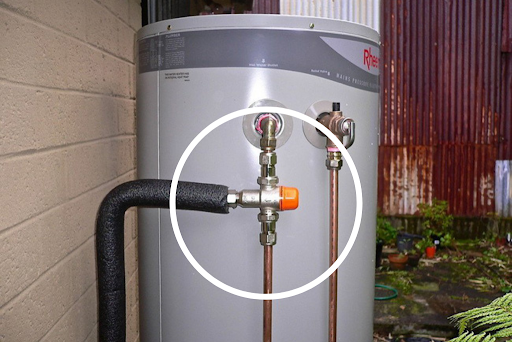
Image credit: Indeep Plumbing
To find your tempering valve, start at your hot water system. In most Townsville homes, it's installed on the external piping just outside the tank.
The valve is a small, brass, T-shaped fitting where three pipes meet. On top of the valve is a plastic cap, usually colour-coded (green, blue, orange, or black). The colour tells a plumber the temperature range and the type of hot water system the valve is designed for.
If your hot water system is tucked away in a garage or a tight cupboard, the valve might be hidden behind some foam insulation.
In some older homes or larger two-storey properties in suburbs like North Ward or Castle Hill, you might find more than one valve. The main valve sits at the tank, but plumbers sometimes install a second point-of-use valve near a bathroom if the pipe run is long. This ensures the water reaches your shower at the right temperature, without losing heat or staying too hot.
Signs Your Tempering Valve Is Failing or Needs Adjustment
1. Lukewarm Showers
If your kitchen tap is hot but your shower is only lukewarm, the valve may be letting in too much cold water. Inside the valve, a wax element moves a small piston that balances hot and cold water. If that piston gets stuck in a position that lets in too much cold water, your shower stays lukewarm, even though the hot water tank is fine.
2. Sudden Changes in Water Pressure
Tempering valves have tiny mesh filters on both the hot and cold inlets to catch debris. Over time, these can clog with minerals from the local water. When these filters get clogged, water flow is restricted. That means:
- If the hot inlet clogs, less hot water can get through, so the shower feels weak or cooler than normal.
- If the cold inlet clogs, less cold water can get through, so the shower can suddenly get hotter than expected.
3. Dangerous Temperature Spikes
If the water suddenly becomes scalding hot, the valve may have stopped letting in cold water completely. This usually happens when the piston or wax element jams in the hot position.
In Townsville, calcium scales and mineral deposits can build up inside the valve. Sometimes a chunk of scale blocks the cold-water inlet or wedges the piston, preventing it from moving, so you get water straight from the tank at 60°C or higher, which is extremely dangerous.
In this situation, call a licensed plumber immediately.
4. Strange Noises or Visible Leaks
If you hear whistling or chattering near your hot water tank when a tap is running, it could mean the valve is struggling. Mineral scales can build up on the internal piston, making it move unevenly or vibrate as it tries to slide and adjust the hot and cold water mix. This is a warning that the valve is under strain and may fail soon.
5. Improper Commissioning After Plumbing Work
When a new hot water system is installed, or plumbing work is done, the tempering valve needs to be commissioned, which means it must be set correctly based on your home water pressure to ensure the water reaching your taps stays at 50°C.
To do this, the plumber turns on a tap and measures the water temperature with a thermometer. If the water is too hot or too cool, they adjust a small screw or knob on the valve to change how much hot and cold water is mixed to reach the set temperature.
If this step is skipped or done poorly, the valve may not mix the water properly for your plumbing system. As a result, you might notice the shower temperature suddenly getting hotter or cooler, especially when someone else in the house uses water (as the pressure changes).
6. Visible Leaks or Green Corrosion
Take a look at the valve itself. If you see water dripping or pooling on the ground, or a crusty green buildup (corrosion) around the joints, the internal seals have likely worn out.
Even a small leak means some water escapes before it reaches the outlet, which disrupts the balance of hot and cold water inside the valve. When that balance is off, the valve can't mix the water properly, so your shower temperature may start fluctuating.
7. Shower Going Hot and Cold
Sometimes your shower temperature swings between hot and cold without you touching the taps. The wax element inside the valve expands and contracts to control how much hot and cold water mix. Over time, especially in older valves, the wax becomes less responsive due to repeated heating cycles and mineral buildup.
This can cause the valve to let in too much hot water, then too much cold, making the shower temperature unstable. As a result, your shower can't stay at a steady, safe temperature, and it feels inconsistent and uncomfortable.
Can You Adjust a Tempering Valve Yourself?
In Queensland, adjusting or installing a tempering valve is considered regulated plumbing work, which must be carried out by a licensed plumber.
Some tempering valves have a visible adjustment cap or a screw under a plastic cover, but trying to adjust it yourself carries real risks.
If an unlicensed person adjusts the valve and someone is injured by hot water, you could be held legally responsible. Incorrect adjustments can also cause other problems:
- Void Your Warranty: Most hot water system manufacturers will not honour a warranty claim if they find the safety components have been tampered with by an unlicensed person like yourself.
- Create a Bacterium Risk: If you accidentally lower the tank temperature while adjusting the valve, you could create an ideal environment for Legionella bacteria to grow, which poses a health risk to your family.
- Insurance Complications: After regulated plumbing work in Queensland, plumbers provide a Form 4 compliance certificate confirming the work was completed properly. If work is done without this documentation, your insurance claims related to plumbing faults or scalding incidents may be rejected.
For these reasons, it's always safest to have a licensed plumber adjust the tempering valve. They will measure the water temperature at your taps, fine-tune the valve so the water stays around 50°C, and provide the correct compliance paperwork.
Final Thoughts
A tempering valve might be small, but it plays a big role in keeping your hot water safe and comfortable. It ensures the water coming out of your taps is at a steady, safe temperature, protecting your family from burns while still keeping your hot water system hot enough inside the tank to prevent bacterial growth.
However, over time, these valves can start to show problems that aren't always obvious, and they're definitely not something to fix yourself. That's why it's important to have a licensed plumber check, adjust, or replace the valve to keep your system safe and reliable.
At 1touch Plumbing, we can take a look at your tempering valve and make sure it's working properly, handle any maintenance or replacement, and give you peace of mind knowing your home is safe and fully compliant.
Contact us today for safe, comfortable hot water year-round.
FAQs
Does Every Tap in My House Need a Tempering Valve?
Not necessarily. According to the Plumbing Code of Australia, the 50°C temperature limit applies to taps used mainly for personal hygiene, such as showers, bathtubs, and bathroom basins. These outlets must be tempered to reduce the risk of scalding.
Kitchen sinks and laundry tubs are often exempt, which is why the water from these taps can feel much hotter. However, many newer homes in Townsville choose to temper the entire house so every tap delivers water at a safer temperature.
Can a Tempering Valve Be Cleaned Instead of Replaced?
Sometimes it can be. If the problem is caused by sediment or debris blocking the inlet filters, a plumber may be able to clean the valve and restore normal water flow.
However, if the internal thermostatic element or seals are worn out, cleaning will not solve the issue. In these cases, the tempering valve needs to be replaced to ensure safe and reliable temperature control.
Do Electric, Gas, and Solar Hot Water Systems All Use Tempering Valves?
Yes. Regardless of whether your hot water system is electric, gas, solar, or a heat pump, the water in the tank is stored at around 60°C or higher to prevent bacterial growth. A tempering valve is then used to reduce the temperature to a safe level at the taps.
Can a Tempering Valve Affect How Fast Hot Water Reaches My Tap?
Yes, a tempering valve can slightly increase the time it takes for hot water to reach your tap.
The valve is typically installed near your hot water tank. When you turn on a tap, the water must first travel from the tank, pass through the valve where it is mixed with cold water, and then travel through your pipes to the bathroom or kitchen. All these steps cause a minor delay compared to a direct line.
However, if you notice a long wait, the issue is more likely related to:
- The tap is far from the hot water tank, so the water has to travel a long way.
- Cold water sitting in the pipes (called dead water) has to be pushed out first.
In some cases, the tempering valve's internal filters can get clogged with mineral deposits or sediment. This can slow the water flow, making it feel like the hot water takes longer to arrive. If this happens, a plumber can clean or replace the valve to restore normal flow.